
.jpg)








Buy-to-Let Mortgage Deposit Requirements Explained
Securing a property investment in 2026 requires more precise planning and financial groundwork than ever before. As outlined in our comprehensive 2026 Buy-to-Let Investment Guide, the market is heavily rewarding professionalized, system-driven landlords while simultaneously filtering out casual investors.
If you are exploring the market, one of the first and most critical hurdles you will encounter is gathering your capital. Unlike the standard residential market, where homeownership schemes or specialised products might let you squeeze by with minimal cash upfront, the commercial reality of property investment demands a much stronger financial commitment.
In this guide, we will break down exactly how much deposit for buy to let you need this year. We will unpack the latest buy to let mortgage criteria, reveal how lenders stress-test your application behind the scenes, and explain how the source of your funds can influence the success of your mortgage application.
Executive Summary
In the highly professionalised 2026 property market, securing a buy-to-let mortgage requires much more than simply having cash in the bank. Today's lenders apply strict scrutiny to your asset's yield, your ownership structure, and the property's energy efficiency before approving your loan.
Here are the critical takeaways for funding your next acquisition:
- The 25% Standard: A 25% deposit (75% LTV) remains the undisputed benchmark for accessing a broad range of competitive mainstream mortgage products.
- Yield Dictates Your Deposit: Having a 25% deposit does not guarantee a 75% loan. Strict Interest Coverage Ratio (ICR) stress tests mean that if a property's rental yield is too low, the lender will force you to put down a larger deposit to bridge the gap.
- The SPV Advantage: Purchasing through a Limited Company (SPV) allows for softer stress tests (typically 125% vs. the personal rate of 145%+), helping you maximise your borrowing power and protect your upfront capital.
- The EPC Factor: The impending 2030 EPC 'C' mandate means unmodernised properties may be unmortgageable on standard products, forcing you into specialist bridging finance that demands much larger deposits.
- Strict Source of Funds: Lenders are legally bound by rigorous Anti-Money Laundering (AML) rules; your deposit must have a clear, verifiable paper trail, whether it comes from savings, equity release, or a formal gift.
1. Minimum Deposit Percentages and LTV Tiers in 2026
Lenders assess investment mortgages through the lens of Loan-to-Value (LTV), which represents the percentage of the property's value you are borrowing compared to the cash you contribute upfront. Because rental properties carry inherently higher risks than owner occupied homes - such as void periods, maintenance emergencies, and tenant defaults - lenders mandate larger deposits to cushion their risk.
In the 2026 market, your deposit options generally fall into three primary LTV tiers:
- The 20% Deposit (80% LTV): While 5% or 10% deposits are virtually non-existent for standard buy-to-lets, it is occasionally possible to secure a mortgage with a 20% deposit. However, this is largely restricted to highly specialist lenders. If you pursue this route, you will almost certainly face higher interest rates, stricter eligibility checks, and massive scrutiny regarding your experience as a landlord.
- The 25% Deposit (75% LTV): This is the undisputed standard benchmark for a buy to let mortgage deposit in the UK. Putting down 25% grants you access to the broadest range of mainstream lenders and highly competitive mortgage products. For the vast majority of investors, 75% LTV is the "sweet spot" that perfectly balances capital efficiency (keeping your cash free for other investments) with manageable monthly repayments.
- The 35% to 40% Deposit (60% to 65% LTV): If you have liquid capital and can push your deposit up to 40%, you will drop into the lowest risk LTV bands. In return for you taking on more of the financial burden, lenders will reward you with the absolute lowest interest rates available on the market. This drastically reduces your monthly borrowing costs and massively improves your net cash flow.
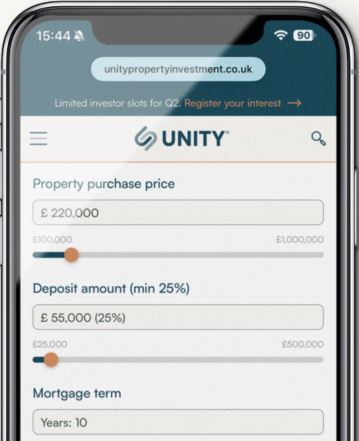
Buy to let investment and rental yield calculator

How Much Deposit is Typically Required for Buy to Let?
To understand the absolute deposit required for buy to let, you have to map those percentages onto real-world property prices. The exact cash figure you need will depend heavily on your chosen region and the type of asset you are purchasing.
Let's look at three realistic scenarios across different UK regions in 2026:
- The Midlands/Northern Entry Point: If you target a high-yield terraced house in a regenerating Northern or Midlands city priced at £150,000, a standard 25% deposit will require a £37,500 cash injection.
- The National Average Scenario: For a solid, reliable commuter property priced at £200,000, you will need a 25% deposit of £50,000. The lender will provide the remaining £150,000 to complete the purchase.
- The South East/London Premium: If you are buying a premium £400,000 property in the highly competitive South East, a 25% deposit necessitates £100,000 in upfront capital.
Crucially, your deposit is only part of your initial capital outlay. You must also budget for extra buy to let mortgage requirements and acquisition costs. One of the most significant costs is Stamp Duty Land Tax (SDLT). Currently, anyone purchasing a buy-to-let or second home in England faces a 5% Stamp Duty surcharge on top of standard residential rates. You can review the exact thresholds and rules on the official GOV.UK Stamp Duty portal. Alongside SDLT, you must also budget for legal fees, valuation fees, and broker or arrangement fees, which can comfortably add an additional 3% to 5% to your total initial costs.
How Interest Coverage Ratio (ICR) Stress Tests Impact Your Deposit Size
Many new investors assume that if they simply have a 25% deposit sitting in the bank, they are automatically guaranteed a 75% LTV mortgage. This is a massive, and often costly, misconception.
Your actual maximum loan size is strictly dictated by the Interest Coverage Ratio (ICR).
Following regulations governed by the Bank of England's Prudential Regulation Authority (PRA), lenders use the ICR to ensure that the property's rental income can comfortably cover the monthly mortgage interest payments. Here is how the stress test mechanism works:
- The Stressed Rate: Lenders do not use the actual mortgage interest rate you will be paying for this calculation. Instead, they apply a hypothetical "stressed" rate often around 5.5%.
- The Rental Buffer: They then require your projected monthly rent to exceed this stressed interest payment by a specific margin, typically between 125% and 145% depending on your tax bracket.
Why this impacts your deposit:
If you want to buy a property at 75% LTV, but the local rental yield is too low to meet the lender's 145% ICR stress test, the lender will simply refuse to lend you the full 75%. To bridge the gap and make the math work, you will be forced to lower the loan amount by putting down a larger deposit. Therefore, learning how do you work out rental yield accurately is essential, because the yield directly dictates the size of the deposit required for buy to let.
Putting down 25% grants you access to the broadest range of mainstream lenders and highly competitive mortgage products. For the vast majority of investors, 75% LTV is the 'sweet spot'.
Limited Company (SPV) Deposit Criteria vs. Personal Ownership
As the market professionalizes, many investors are choosing to purchase properties through Special Purpose Vehicles (SPVs) - limited companies set up specifically to hold real estate. The deposit rules shift slightly depending on your ownership structure, but the advantages of a corporate structure are undeniable in 2026.
- The Baseline Deposit is Similar: The headline requirement is generally the same; most mainstream lenders require a minimum 25% deposit whether you apply as an individual or through an SPV.
- The Massive ICR Advantage: SPVs hold a major structural advantage when it comes to stress testing. Because limited companies pay Corporation Tax rather than higher-rate personal Income Tax, and can deduct 100% of their mortgage interest as a business expense, lenders frequently apply a much softer 125% ICR calculation.
- Protecting Your Capital: In contrast, individual higher-rate taxpayers are often hit with a severe 145% to 167% ICR calculation. Because the stress test is lower for an SPV, a limited company can often borrow more against the exact same rental income, protecting your deposit capital and preventing you from having to unexpectedly inject more cash to lower the LTV.
The EPC Mandate: How Property Energy Ratings Shift Deposit Needs
In 2026, the energy efficiency of the property you are buying plays a direct role in your lending eligibility. With the government pushing for all rental properties to achieve an Energy Performance Certificate (EPC) rating of 'C' or above by 2030, lenders have adjusted their risk profiles accordingly.
If you are purchasing a modern, energy-efficient property (EPC A-C), you will often be rewarded with "Green Mortgages." These products not only offer slightly lower interest rates but can sometimes feature more flexible deposit requirements or cashback incentives.
Conversely, if you are targeting an older, unmodernised property with an EPC rating of E or below, mainstream lenders may view the asset as unmortgageable until it is improved. In these scenarios, you cannot use a standard buy-to-let mortgage. Instead, you would need to use specialist bridging finance to purchase the property and fund the retrofits. Bridging lenders often require larger deposits (sometimes 30% to 35%), and the interest rates are significantly higher, meaning your initial capital requirements will be much larger before you can refinance onto a standard 25% deposit buy-to-let product.
Acceptable Sources of Deposit
Lenders are bound by strict Anti-Money Laundering (AML) regulations and will heavily scrutinize where your deposit money comes from. You must be able to leave a clear, verifiable paper trail showing exactly how the funds were accumulated.
Acceptable sources to fund your buy to let mortgage deposit include:
- Personal Savings: Funds accumulated over time in a dedicated savings, ISA, or investment account. Lenders will usually ask for three to six months of bank statements to verify the build-up of these funds.
- Remortgaging Equity: One of the most powerful ways to build a portfolio is to release equity from an existing residential home or another buy-to-let property and use those funds as your next deposit.
- Gifted Deposits: Many lenders accept deposits gifted by close family members (like parents or grandparents), provided there is a formal legal declaration that the money is a true, non-repayable gift and not a hidden loan.
- Inheritance or Asset Sales: Documented lump sums from inheritances, pensions, or the sale of stocks and shares are perfectly valid.
If your funds come from unverified, offshore, or high-risk sources, or from an unsecured personal loan lenders are highly likely to decline the application outright.
How Credit History Affects the Deposit Required
While buy-to-let lending is heavily asset-driven (focusing mostly on the property's rental yield), your personal financial footprint still acts as the ultimate gatekeeper. Your personal credit score directly influences your buy to let mortgage criteria.
If you have a pristine credit history, you will have the luxury of choosing from the widest array of lenders at the standard 25% deposit level, securing the most competitive rates. However, if you have a history of missed payments, defaults, or adverse credit, the lender's perceived risk spikes dramatically. To offset this risk, they will heavily restrict your options and likely demand a much larger deposit - sometimes up to 40% alongside charging premium interest rates.
Finally, do not attempt to bypass these strict investment requirements by using a standard home loan. There are severe legal and financial differences between a buy to let mortgage vs residential mortgage. Attempting to let a property on a residential product is considered mortgage fraud and a breach of contract, leading to immediate loan recall.

Portfolio projection tool
Conclusion: Structuring Your Investment
Securing your buy-to-let mortgage deposit is the foundational step in building a resilient, profitable property portfolio in 2026. As the market finalises its transition into a highly professionalised sector, the days of simply throwing down a 10% deposit and hoping for passive capital growth are firmly behind us.
Today, lenders heavily reward prepared investors. By understanding exactly how your asset's yield dictates your loan size, taking advantage of the softer stress tests afforded by Limited Company (SPV) structures, and proactively factoring in EPC requirements, you can make your upfront capital go significantly further.
Before committing your hard-earned funds, the most crucial next step is to rigorously run your numbers. You must map out your exact yield requirements, stress-test your financing costs, and project your long-term portfolio growth to ensure your chosen asset aligns with your ultimate financial goals.
-v1.avif)
Get investor insights and early access to opportunities
Join our investor briefings for structured insights, market updates, and priority access to new deals.

No spam, just timely insights for investors We respect your privacy and never sell your data
Case study

- Property Price:£100k
- Mkt Value at purchase:£105k
- Day one equity:£5,000
- Yield:10.8%
- ROCE:21.6%
.avif)


